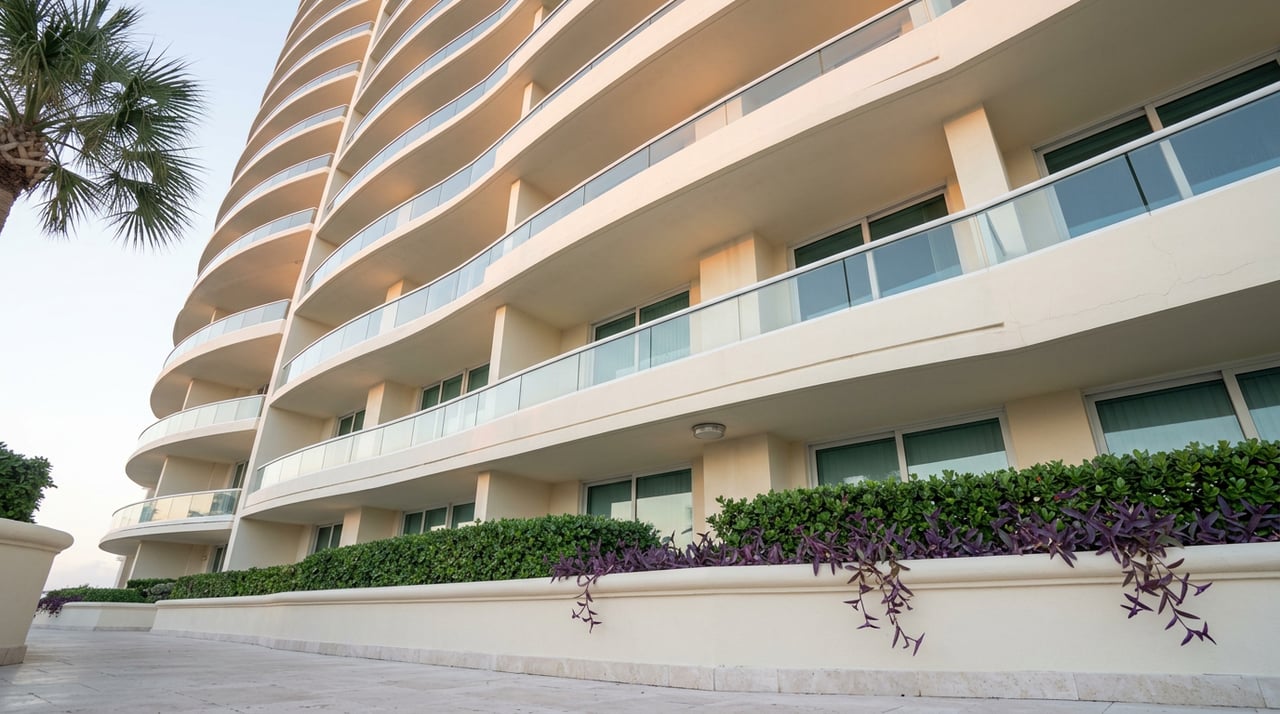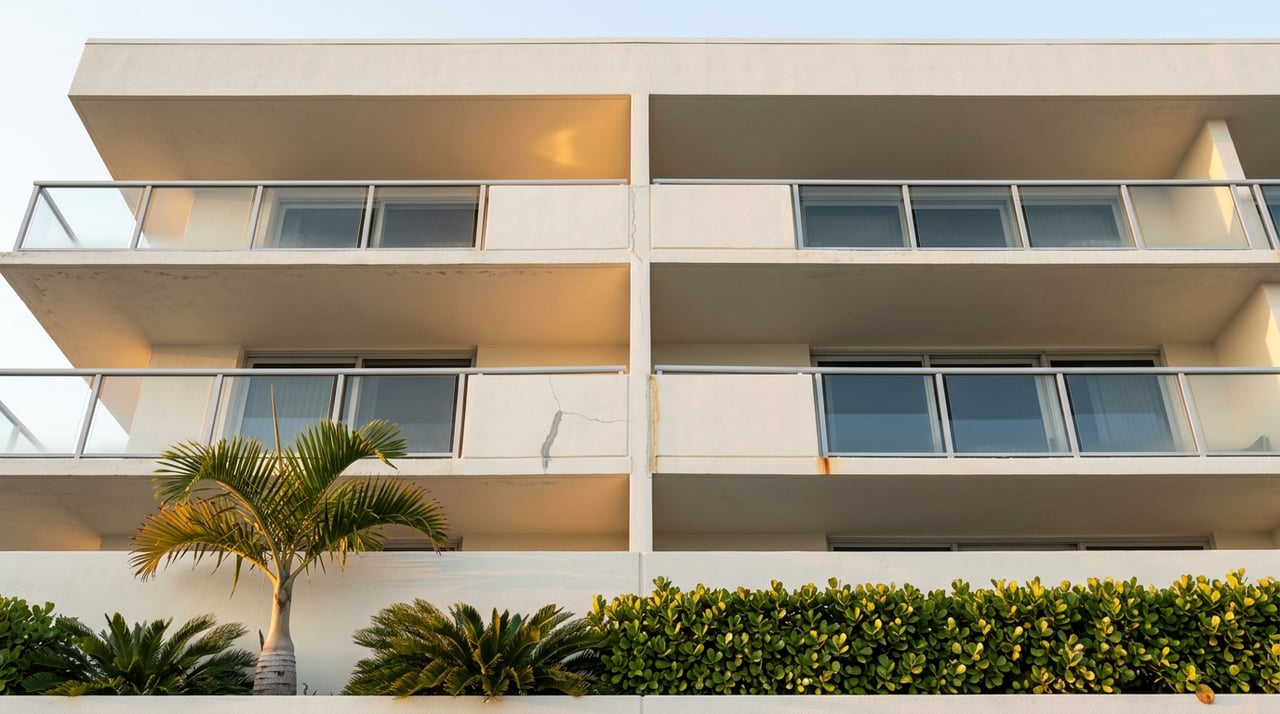
A two-bedroom oceanfront unit on Collins Avenue has been asking near $10 million for close to a year. Three blocks inland, a similarly sized condo in a building built the same decade closed this summer for barely a third of that number, after just two months on the market. In most towns this size, that kind of spread would be a fluke. In Surfside, it is becoming the pattern, and the reason has almost nothing to do with square footage or view.
Surfside's own rolling twelve-month numbers through July 2026 tell the story in outline. Only 39 homes changed hands out of 3,196 households, an annual absorption rate of roughly 1.2 percent, yet total sales volume still reached $134.8 million. Closed sales averaged $3.5 million. Active listings right now are averaging $10.5 million. Price per square foot on closed deals sits near $1,293, while asking prices are running at $1,523. Closed properties spent an average of 188 days on the market. Current listings are sitting for 342.
A gap that size in a market this small is not noise from a handful of trophy listings. It is what happens when buyers stop pricing a neighborhood and start pricing individual buildings.
Why the median broke here specifically
Surfside is the town where Champlain Towers South stood, and where it partially collapsed on June 24, 2021, killing 98 people. That fact changes how condo buyers in this specific zip code behave more than it changes buyer behavior almost anywhere else in Florida. A listing sheet that would satisfy a buyer in Hallandale or Sunny Isles gets a second and third round of scrutiny here, because the building that started the entire statewide reform effort was three blocks from where the next offer might close.
Florida's response created two separate but overlapping obligations for any condo or co-op building three stories or taller. A milestone inspection is a physical structural evaluation performed by a licensed engineer or architect, triggered at 30 years statewide or 25 years for coastal buildings under Miami-Dade County's schedule. A Structural Integrity Reserve Study, or SIRS, is a financial planning document that looks at eight specific structural components including the roof, load-bearing walls, and waterproofing, and calculates exactly how much money the association needs to be setting aside each year. They are related. They are not the same document, and a building can pass one while badly failing the other.
The deadline that matters most for what is happening in Surfside right now is January 1, 2026. As of that date, associations can no longer put reserve funding for those eight structural items to a member vote and waive or reduce it. For decades, boards kept dues artificially low by voting down full reserve contributions. That option is gone for structural items, which means any building that spent years underfunding now has to catch up, either through higher monthly dues, a special assessment, or a loan against future collections. You can find the current inspection and SIRS requirements directly through the Florida Department of Business and Professional Regulation's Condominium Information and Resources page, which also explains how associations must now submit SIRS data electronically.
The town noticed too
Surfside did not wait for the state to solve this on its own. The town approved a Building Recertification Permit Fee Assistance Grant Program in 2026 that gives eligible condominium buildings up to $200,000 per recertification cycle toward municipal permit fees, including structural and electrical review fees.
The detail that matters for anyone underwriting a purchase is what the grant does not cover. It pays for the town's own recertification permit fees. It does not pay for the engineer's report, the actual construction, legal fees, or fines. A building can be fully eligible for the grant and still be carrying a seven-figure reserve shortfall that the grant never touches.
That is the honest read on Surfside's compliance landscape right now. The town is trying to soften the administrative cost of doing this correctly. It is not, and cannot, absorb the underlying capital need that decades of underfunded reserves created.
What a wide price gap actually buys you
The stakes here are not abstract. Two buildings just outside Surfside show what happens when a SIRS-driven reserve catch-up becomes real. Owners at Mediterranean Village in Aventura were hit with special assessments as high as $400,000 per unit. At The Cricket Club in North Miami, assessments reached $134,000 per unit. Neither building suffered a sudden structural failure. Both were the predictable result of inspections finally surfacing years of deferred maintenance that had been quietly voted around.
That is the risk a buyer is actually pricing when they walk away from a well-located Surfside unit sitting at 342 days on market. The listing price reflects what the seller wants the location to be worth. The eventual sale price reflects what the building's paperwork says it is actually worth, once someone reads the reserve study line by line.
Before writing an offer on a Surfside condo, ask the association for:
- The most recent Structural Integrity Reserve Study, in full, not a summary page
- The current year's budget line for reserves compared against what the SIRS recommends funding
- Written confirmation of milestone inspection status and any Phase 2 findings
- Disclosure of any pending or recently passed special assessment, and who is contractually responsible for it at closing
Florida law entitles a buyer to these records as part of the standard condo disclosure package. Associations with 25 or more units are now required to make governing documents, budgets, and reserve studies accessible online, so a board that cannot produce these within a few business days is telling you something on its own.
What this means if you are selling
If you own a well-maintained building in Surfside with a fully funded SIRS and a clean milestone inspection, that documentation is now a selling point, not paperwork to get through. Buyers in this market are actively rewarding buildings that can prove their numbers match. Pricing a listing based on last year's comps without accounting for how your building's reserve position compares to a shakier one down the street is a fast way to end up in the 342-day column instead of the 188-day one.
A few questions worth asking directly
Does a Surfside condo seller have to tell me about a pending special assessment before I make an offer? Yes. Florida law requires disclosure of pending assessments, and the specifics of who pays it, seller or buyer, are typically addressed at or before closing through the contract's assessment allocation language. Read that clause before you sign anything.
Is Surfside's 2026 recertification grant available to me as an individual unit owner? No. The grant is structured for the condominium association, not individual owners, and it applies only to the town's own permit fees for the recertification process, not to engineering, repairs, or legal costs the association may also be facing.
Surfside rewards buyers and sellers who treat every building as its own underwriting exercise. A median price or a per-square-foot average can tell you what the town looked like on paper twelve months ago. It cannot tell you whether the building you are actually considering has done the work.
If you are trying to figure out what a specific Surfside building's numbers really say, or you are ready to find out what your own unit is worth in a market this selective, Rafael Szydlowski can walk through the documents with you before you make the next move. Request a Free Home Valuation to start with a clear picture of where your property actually stands.