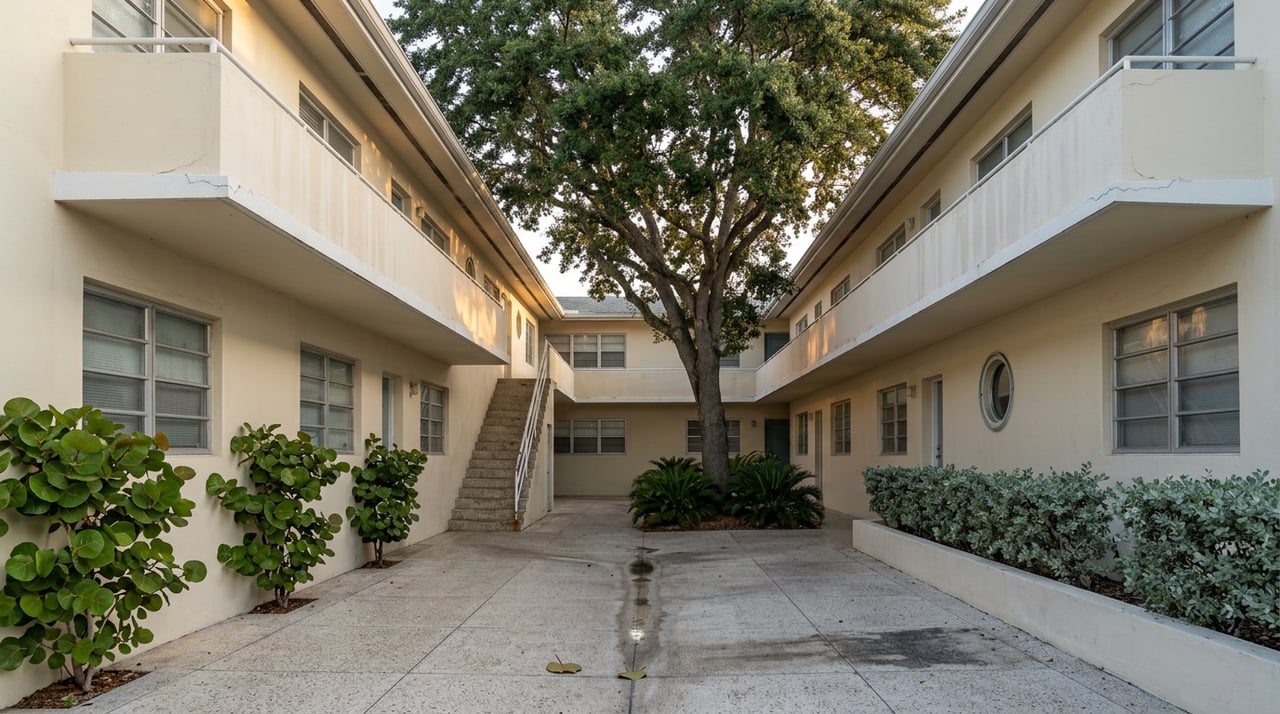
An owner at Mediterranean Village in Aventura opened a letter from the board and found a bill for up to $400,000. Not a hypothetical. Not a worst-case scenario buried in a disclosure packet. A real number, tied to a real reserve shortfall, delivered after decades in which Florida law let associations legally skip saving for exactly this kind of repair.
Every guide to Florida's post-Surfside condo rules will tell you to ask for the Structural Integrity Reserve Study before you buy. That advice is correct and also incomplete. The document that actually determines who writes the check when a special assessment appears mid-transaction isn't the SIRS report itself. It's the date on the purchase contract, measured against the date the association's board formally acted. Get that timing wrong as a seller, and a $50,000 assessment you assumed was the buyer's problem becomes yours. Get it right, and the opposite is true.
The Word That Changes Everything: Pending vs. Levied
Florida real estate contracts use the Condominium Rider to handle assessment disclosure, and the rider draws a hard line between two words that sound similar and behave nothing alike. A pending assessment is one that's been proposed and placed on a board meeting agenda. A levied assessment is one the board has formally approved, meaning it's binding on owners.
That distinction matters because most sellers, and more than a few agents, treat "the board is talking about an assessment" as functionally the same as "the board approved an assessment." It isn't. A pending item can change, shrink, get tabled, or get restructured before a vote. A levied one is a debt attached to the unit.
If you're listing an Aventura condo right now and your board has an assessment on next month's agenda but hasn't voted, what you disclose and how a buyer's lender treats that disclosure depends on which side of that vote your contract falls.
The Date That Actually Decides Who Pays
Here's the mechanism that doesn't get enough attention in the general "check the reserve study" advice: under typical Florida condo purchase contract language, an assessment levied before the contract's effective date is generally the seller's responsibility, and one levied after that date typically becomes the buyer's. Not the closing date. Not the date the buyer found out. The date the contract itself went effective.
Play that forward. A board votes to approve a $60,000 structural assessment on a Tuesday. If your contract went effective the Monday before, that cost is functionally yours to resolve before or at closing. If your contract goes effective the Wednesday after, the buyer inherits it, assuming the contract language and any addenda don't say otherwise.
This is why the timing of a listing in an Aventura building with a known reserve gap isn't a minor scheduling detail. It's the single biggest lever a seller has over who absorbs a cost that, per multiple accounts of the Mediterranean Village situation, can run into six figures. It's also why buyers who skip past the estoppel certificate and rely on the seller's verbal assurance that "nothing's pending" are taking on more risk than they realize. Once an association's financial disclosures are in hand, a buyer also has a legal window, commonly cited as seven days, to review and potentially rescind the contract. That clock starts when the documents are delivered, not when the buyer gets around to reading them.
Why This Isn't Winding Down in Aventura
The instinct is to assume the wave of surprise assessments is a 2021-to-2023 story that's mostly resolved by now. Aventura's own building stock says otherwise.
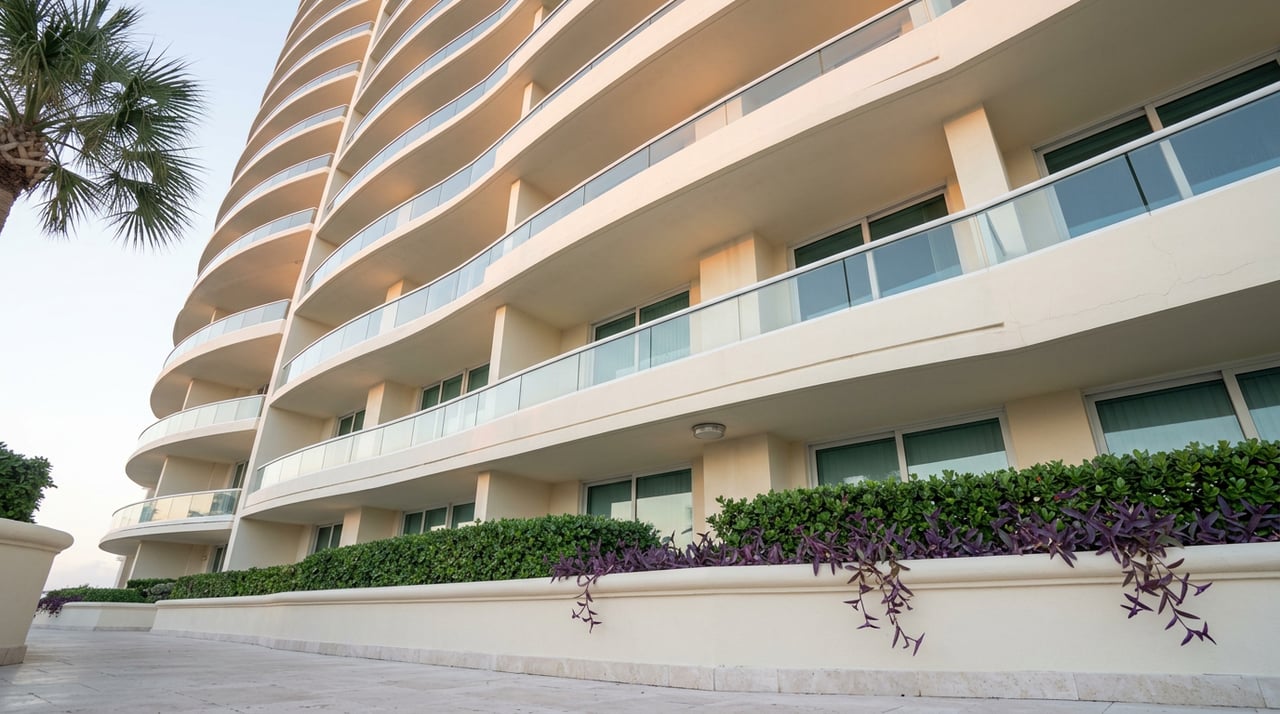
Turnberry Towers, the 30-story tower at 19355 Turnberry Way, was completed in 1981. It's one of several Aventura-area condominiums built in that first wave of high-rise development along the Intracoastal, decades before a Structural Integrity Reserve Study was a legal requirement for anything. For most of that building's life, and for buildings like it across Aventura, associations could vote to waive full reserve funding. Boards did it routinely, because dues stayed lower and nobody wanted to force a fee increase for a repair that might be years away.
That option is gone. Under HB 913, which took effect July 1, 2025, associations can no longer waive or reduce reserve funding for the eight structural components a SIRS covers, and budgets adopted on or after January 1, 2025 have to fund those reserves in full. The state's Division of Condominiums also set December 31, 2025 as the deadline for most associations to complete their first SIRS, with buildings coordinating that study alongside a required milestone inspection getting until December 31, 2026.
Put those two facts together and the pattern is clear: buildings that spent forty years legally deferring structural reserves are now, for the first time, required to find out exactly how underfunded they are and fix it on a fixed timeline. That means the flow of newly discovered shortfalls in Aventura's older towers isn't slowing down as the post-Surfside reforms mature. It's arguably just getting started, as more buildings complete their first real SIRS and the board has to decide how to close whatever gap that study finds, through higher dues, a loan, or a special assessment.
For a seller, that means the absence of a current assessment today is not the same as the absence of risk. If your building hasn't completed its SIRS yet, or completed one and hasn't published a funding plan, that's information a buyer's lender will eventually want, and information you're better off having answered before a showing than during an inspection period.
What to Pull Before You List, Not After
The practical version of all this is a short list, and the order matters almost as much as the contents:
- The building's most recent SIRS, or written confirmation from the association of when it will be completed, since a missing SIRS past the deadline is treated as a breach of the board's fiduciary duty under Florida law
- The milestone inspection report or summary, if the building has reached the 30-year threshold (25 years for some coastal buildings), since Phase 2 findings often precede a special assessment vote by months
- Board meeting minutes from the last two quarters, because a pending item can show up in minutes long before it appears on a formal notice
- The current reserve funding schedule, so you know whether contributions are tracking the SIRS recommendation or falling behind it
- A current estoppel certificate, which is the document a buyer's title company will rely on to confirm exactly what's owed and what's been approved as of a specific date
Pulling these before you sign a listing agreement, not after an offer comes in, gives you room to time the contract's effective date around a board's vote calendar instead of reacting to it. It also lets you have an honest conversation with a buyer's agent up front, which tends to keep deals from stalling in escrow over a document nobody asked for until week three.
There's a financing layer here too. Once an assessment is disclosed, whether pending or levied, or if there's active litigation over one, lenders get cautious. Fannie Mae and Freddie Mac warrantability guidelines can tighten or close off conventional financing on a building with unresolved special assessment questions, which shrinks the buyer pool to cash purchasers or borrowers willing to accept a non-warrantable loan at a higher rate. That's a market reality worth knowing before you price a listing, not after a buyer's financing falls through.
A Few Direct Questions
Do I have to disclose an assessment that hasn't been formally approved yet? Yes. Florida contracts require disclosure of both pending and levied assessments through the Condominium Rider. The distinction between the two affects who's financially responsible, not whether you have to say anything at all.
Can a pending assessment become the buyer's responsibility even if I knew about it before listing? It depends on when the board actually votes relative to your contract's effective date, and on what the contract itself says. Standard allocation language points to the vote date, but addenda can and do override that default.
Does any of this apply to single-family homes in Aventura? No. Milestone inspections and SIRS requirements apply to condominium and cooperative buildings three or more habitable stories tall. Single-family homes aren't subject to either requirement.
If you're weighing when to list a condo in an older Aventura building, the honest first step is a conversation about where your association actually stands on its reserve study and inspection timeline, not a guess. Rafael Szydlowski has spent more than three decades managing exactly this kind of timing question for sellers across Aventura's coastal towers. Request a Free Home Valuation and get a straight read on your building's compliance status before you set a list date.