Wondering whether a historic condo or a modern tower is the better fit in Miami Beach? It is a smart question, because here your choice is about much more than style. In a city shaped by architecture, flood exposure, and building rules, the right condo comes down to how you want to live and how carefully the building is managed. Let’s dive in.
Why condo choice matters more in Miami Beach
Miami Beach is not a typical condo market. The city sits on a barrier island between Biscayne Bay and the Atlantic Ocean, and the city reports that 93% of buildings are in the Special Flood Hazard Area. That means elevation, flood exposure, insurance, and storm-readiness should be part of your decision from day one.
Building age also matters here more than in many other markets. Miami Beach has one of the most distinctive architectural landscapes in the country, with Art Deco, MiMo, and contemporary buildings all competing for attention. When you buy here, you are not only choosing a unit. You are choosing a building era, a governance style, and a long-term ownership experience.
What counts as a historic condo
In Miami Beach, “historic” does not mean just one thing. It can refer to Art Deco buildings, mid-century MiMo properties, or condos in one of the city’s designated historic districts. The city notes that its historic districts include more than 2,600 buildings, with about 70% considered contributing or historic.
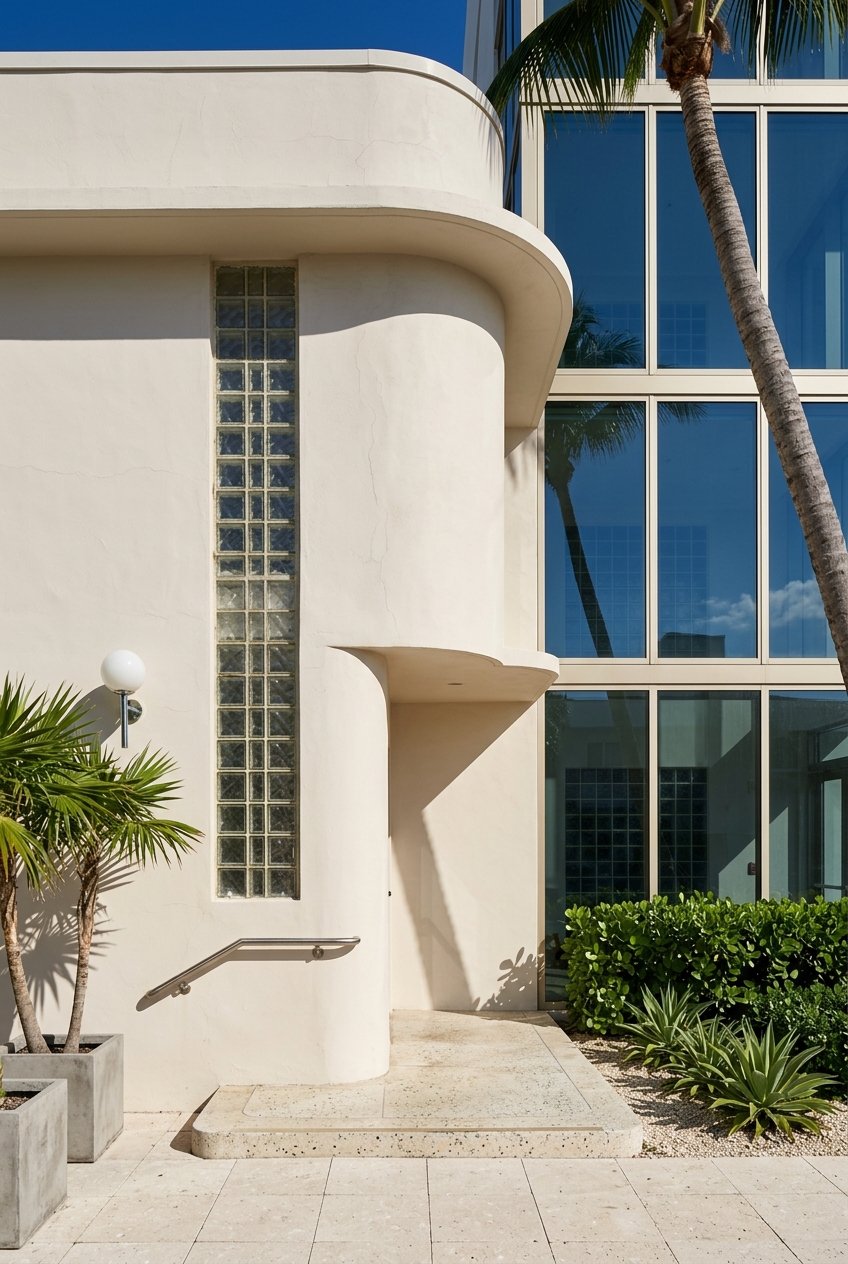
That gives you a wide range of options. Some buildings offer colorful Art Deco details and geometric design, while others reflect MiMo features like sunshades, mosaic walls, and tropical forms. If you want a condo that feels unmistakably Miami Beach, historic properties often deliver that sense of identity better than a generic high-rise.
Why buyers choose historic condos
Historic condos usually appeal to buyers who value character first. You may prefer a building with architectural personality, a smaller-scale feel, or a location in a well-known walkable district. In areas such as Española Way, Ocean Drive, Flamingo Park, and North Beach, the setting can be just as important as the unit itself.
These condos can also feel more unique from one building to the next. Instead of standardized finishes and large amenity decks, you may find original design elements, a strong sense of place, and a living experience that feels tied to Miami Beach’s past. For some buyers, that is the whole point.
Historic condo trade-offs to know
Character usually comes with more rules and more research. In historic districts, the city’s Historic Preservation Board reviews alterations, modifications, improvements, and certain design changes to designated historic properties. That can affect how exterior work is handled and may shape renovation plans.
You should also avoid assumptions about convenience features. Parking, storage, renovation restrictions, and repair history can vary widely from one historic condo to another. A beautiful facade does not tell you how the building has been maintained or how the association handles capital projects.
There may be financial incentives for eligible restoration or rehabilitation work. Miami-Dade County offers a 10-year ad valorem tax exemption for qualifying designated historic properties undergoing approved restoration or rehabilitation, but it applies only to the county operating portion of taxes and requires both pre-construction and post-construction applications. Because eligibility is specific, you should verify whether a building and project qualify before relying on that benefit.
What modern condos offer
Modern condos tend to appeal to buyers who want a more contemporary lifestyle. You may be looking for updated systems, current layouts, newer common areas, or amenity packages that fit how you live today. In many cases, modern towers provide a more familiar framework for buyers comparing features across buildings.
There is also a practical advantage in newer construction. Miami Beach advises owners and builders to follow the Florida Building Code and city code to reduce flood risk, and the city’s Resilience Code is part of its response to current and future flood conditions. While no building is free from maintenance or insurance concerns, newer properties generally begin from a later code baseline.
Modern condos still need careful review
It is easy to assume a newer tower will be simpler to own, but that is not always true. Florida law requires reserve planning and inspections for many condominium buildings, and Miami Beach also has recertification rules for commercial and multifamily buildings. A modern lobby and sleek amenities do not replace good financial management.
That is why you should review the association’s budget, reserve funding, and repair history just as closely in a newer building as in an older one. A building that looks turnkey may still face major expenses if reserves are weak or maintenance has been deferred. In Miami Beach, polished presentation should never be your only filter.
Flood risk affects both choices
Whether you prefer Art Deco charm or a glass tower, flood risk belongs in your condo search. Miami Beach says 93% of buildings are in the Special Flood Hazard Area, and flood insurance is required for federally backed mortgages and recommended for all properties. That makes insurance costs and building resilience relevant in almost every purchase.
You should ask about elevation, drainage, flood planning, and the building’s general storm-readiness. These issues are not limited to older buildings. In Miami Beach, they are part of smart condo buying across the board.
Inspections and reserves matter in 2026
If you are buying a condo in Miami Beach, the building documents matter as much as the floor plan. Florida’s milestone inspection law requires a structural milestone inspection for condo and co-op buildings that are three habitable stories or more by the year the building turns 30, and then every 10 years after that. The law also allows a first inspection at 25 years in some local conditions, including proximity to salt water.
Miami Beach adds its own recertification requirement. The city states that all commercial and multifamily buildings built on or after 1993 must undergo recertification at 30 years and every 10 years after that. In a coastal market, these timelines are important because they can affect both budgeting and buyer confidence.
Reserve studies are also a major part of condo due diligence. Florida law requires a Structural Integrity Reserve Study at least every 10 years for buildings that are three habitable stories or higher, and the study covers key systems such as the roof, structure, fireproofing, plumbing, electrical systems, waterproofing and exterior painting, windows and exterior doors, along with other major deferred-maintenance items tied to those systems.
Documents you should request
Florida condo-sale disclosure rules give you access to important records before you commit. As a buyer, you are entitled to review core governing documents and financial materials. If applicable, you can also review the inspector-prepared summary of the milestone report and the association’s most recent reserve study.
Focus on these items before making your final decision:
- Declaration, articles, bylaws, and rules
- Most recent annual financial statement
- Current association budget
- Latest milestone inspection summary, if applicable
- Most recent Structural Integrity Reserve Study, if applicable
- Recent special assessments
- Repair and maintenance history
- Renovation, parking, storage, and use rules
- Flood and insurance exposure
This paperwork often tells you more than the marketing brochure ever will. In many Miami Beach condo purchases, the best choice is the building with the clearest records and the most responsible management.
Historic vs modern: how to decide
If you are torn between the two, start with your lifestyle. Historic condos may be the better fit if you care most about architecture, neighborhood texture, and a distinctly Miami Beach feel. Modern condos may be the better fit if you want more contemporary systems, layouts, and amenities.
Then move from lifestyle to risk tolerance. Are you comfortable with preservation review, building-by-building variability, and a more customized due diligence process? Or do you prefer a more standardized ownership framework, while still reviewing budgets and reserves carefully?
Finally, compare the building, not the category. A well-managed historic condo can be a stronger buy than a poorly run modern tower. A newer building with weak reserves can create just as much stress as an older one with deferred maintenance.
A simple buyer checklist
Before you choose a historic or modern condo in Miami Beach, ask yourself:
- Do you want architectural character or contemporary convenience?
- How important are amenities, parking, and storage?
- Are you comfortable with historic preservation rules if they apply?
- What do the building’s reserves and budget look like?
- Has the building completed required inspections and reserve studies?
- Are there recent or likely special assessments?
- How does the building address flood exposure and insurance?
- Do the location and building rules match how you plan to use the condo?
When you answer those questions honestly, the right direction usually becomes clearer.
Choosing between a historic and modern condo in Miami Beach is rarely just about appearance. It is about matching your lifestyle with the realities of ownership in a coastal condo market where architecture, flood exposure, inspections, and association management all matter. If you want experienced guidance comparing buildings, reviewing the big-picture trade-offs, and narrowing your search with confidence, connect with Rafael Szydlowski.
FAQs
What is the difference between historic and modern condos in Miami Beach?
- Historic condos are typically tied to older architectural eras such as Art Deco or MiMo and may be located in designated historic districts, while modern condos usually offer more contemporary design, systems, and amenity packages.
Are historic condos in Miami Beach harder to renovate?
- They can be, especially if the property is in a historic district where the Historic Preservation Board reviews certain alterations, modifications, improvements, and exterior-related changes.
Do modern Miami Beach condos have fewer maintenance risks?
- Not necessarily. Newer buildings may start from a later code baseline, but you still need to review reserve funding, repair history, inspections, and association budgeting carefully.
What condo documents should buyers review in Miami Beach?
- Buyers should review the declaration, articles, bylaws, rules, most recent annual financial statement, current budget, and, if applicable, the milestone inspection summary and the most recent Structural Integrity Reserve Study.
Why is flood risk important when buying a Miami Beach condo?
- Miami Beach reports that 93% of buildings are in the Special Flood Hazard Area, so flood exposure, insurance, elevation, drainage, and storm-readiness can all affect ownership costs and risk.
How do I choose the right Miami Beach condo for my lifestyle?
- Start by deciding whether you value architectural character or contemporary convenience more, then compare each building’s documents, reserves, rules, inspection history, and flood-related considerations before making your decision.