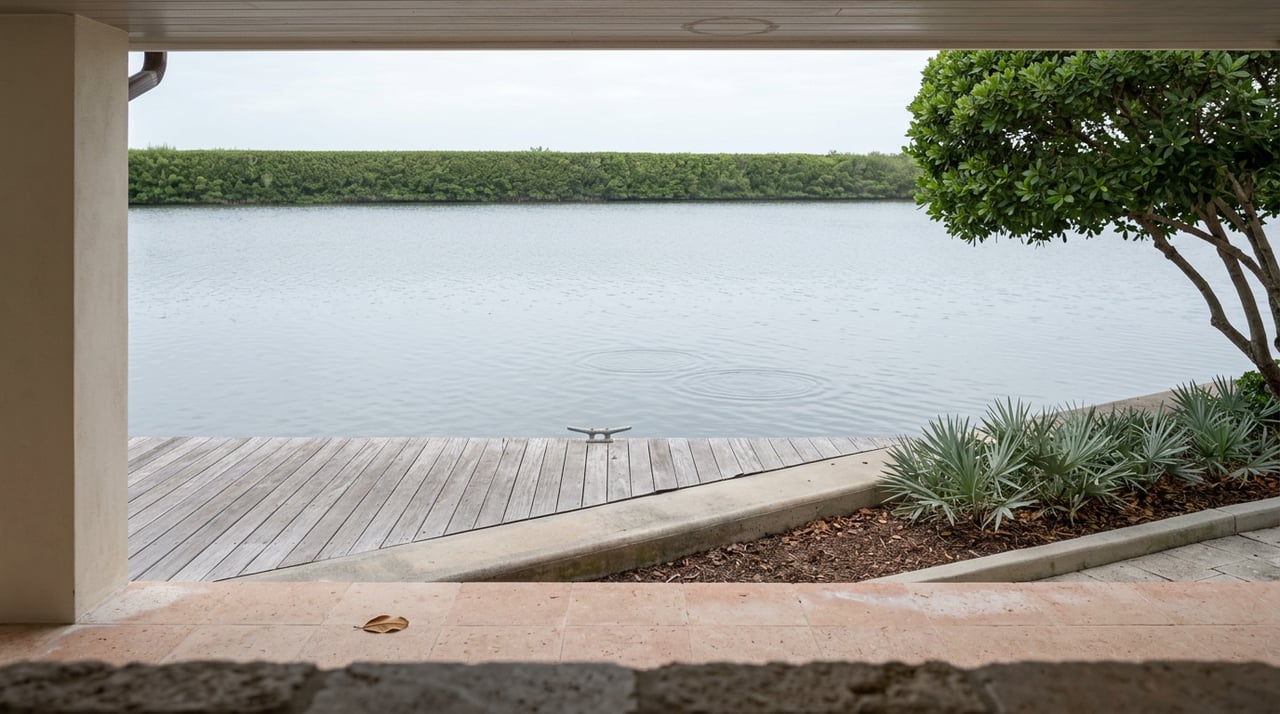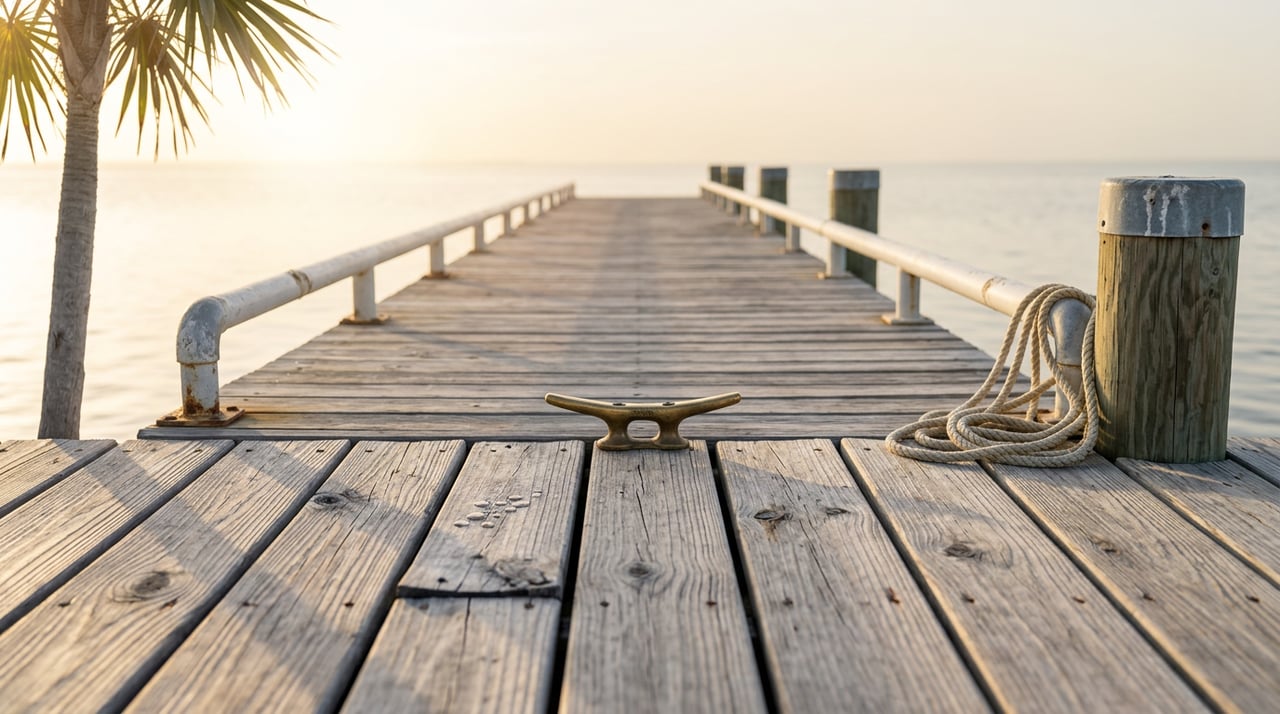
Drive down Collins Avenue in Sunny Isles Beach and the ocean disappears behind glass for nearly two miles. Acqualina, Turnberry Ocean Club, Porsche Design Tower, one curtain-walled tower after another, each with its own pool deck and cabana row. Along this stretch of shoreline, residential towers and resort amenities sit alongside public places to reach the water. One public place to take in a sunset is a wooden dock that was damaged by Hurricane Wilma and later rebuilt.
That dock is the Newport Fishing Pier, and it is the rare piece of Sunny Isles Beach waterfront that belongs to nobody in particular, which is exactly why it belongs to everybody.
A Pier That Almost Wasn't Here
The pier goes back to 1936, built as a private attraction stretching roughly 800 feet into the Atlantic. It did not have an easy life. By 1980 the structure was declared unsafe, and even after earning a historic designation in 1982, demolition was a real possibility until the owners of the Newport Beachside Hotel & Resort stepped in during 1985, leasing the pier from the state and rebuilding it for fishing, shopping, and dining.
Hurricane Wilma undid a lot of that work in 2005. City engineers inspected the damage and concluded the pier could no longer be trusted, which forced another closure. It took until 2013 for the current structure, now managed by the city's Cultural & Community Services Department, to reopen at its present length of 776 feet, still marketed as Miami-Dade's only public fishing pier. The pier is part of a public-private partnership between the city and the hotel operator. Visitors can walk out over the ocean here without an admission charge.
What 776 Feet of Public Dock Actually Holds
Walk the pier at 7 a.m. and you will find anglers working rod holders and cleaning stations for snook and Spanish mackerel, the two catches most consistently reported off this stretch of Atlantic. Come back at 6 p.m. and the crowd has changed entirely. Sandbar at Newport Pier, the bar built directly onto the pier deck, opens at 11 a.m. and runs until 9 p.m., serving frozen cocktails and Floridian-Caribbean bites to a crowd playing giant Jenga against a 360-degree ocean backdrop. The operator's own description calls it the only spot in Miami where you can sip a drink right above the Atlantic, and on a pier this narrow, that claim is hard to argue with.
What makes this interesting is not the bar itself. Beachfront bars are not rare in this city. What is rare is that this one sits on public land, open to anyone walking up from Collins Avenue, no reservation or resort wristband required, on the same 776 feet where someone is still legally allowed to cast a line for kingfish. In a city where the phrase "Florida's Riviera" gets attached to towering condominium resorts lining the sand, the pier is the one place where a renter, a retiree, and a resident of a $4 million unit are standing on the exact same planks watching the exact same sunset.
The City's Other Free Ticket to Summer Nights
The pier is not the only place Sunny Isles Beach has kept the evening free of a cover charge. A few blocks north, Gilbert Samson Oceanfront Park does the same thing on a smaller scale. The 2.1-acre park sits directly on the sand and hosts a rotating slate of free community performances through the summer, including a live concert on July 22 that ran from 7 to 8:30 p.m., open to anyone willing to bring a folding chair. The city's parks and recreation calendar keeps the schedule updated as new dates get added, and the format has stayed consistent for years: no ticket, no gate, just a stage on public sand.
A short walk inland, Heritage Park adds a splash pad and playground to the same no-admission model, which matters if the evening in question involves kids who are done with the beach by 6 p.m. but not done being outside. None of these places generate headlines the way a new tower opening does. They do not need to. They are simply where a decent share of the city's evening actually happens, which is a different thing than where its skyline gets photographed.
Where the Evening Keeps Going
For residents who want dinner after the pier or the concert, the options within a short walk lean international and specific rather than generic beach-town fare. Il Mulino New York at the Acqualina Resort has built a following on Abruzzese cooking, hand-cut pastas that reward the wait. Avra Estiatorio, tucked into the Estates at Acqualina, does whole fish flown in from the Mediterranean and grilled over charcoal, finished tableside with the restaurant's signature ladolemono sauce. Along the Intracoastal side, Baleen Kitchen at Solé Miami leans into a global menu with an oceanfront terrace, while Argentine steakhouse La Cabrera made Sunny Isles Beach its first Miami location before expanding elsewhere in the region.
None of these require a car ride to reach from the pier or the park. That proximity is part of the pattern. The evening here does not require picking one activity and committing to it for the night. A resident can fish for an hour, catch the tail end of a free concert, and still make a dinner reservation, all inside a fifteen-minute walk.
What This Says About the City
Sunny Isles Beach markets itself around its towers, and there is a reason for that. The skyline is genuinely dramatic and the resort amenities inside those buildings are real. But the towers are not where the city's daily rhythm actually lives. That rhythm is on a public pier whose demolition was once a real possibility, in a small oceanfront park that still runs a free concert series, and in a scatter of restaurants close enough to walk to afterward.
The pier's history includes a state historic designation and its reopening in 2013 after rebuilding. Whatever gets built next along Collins Avenue, the pier is likely to stay what it is today: the one part of the water that belongs to whoever shows up.
Whether you already call Sunny Isles Beach home or you are tracking what makes one South Florida coastal city feel different from the next, understanding a place at street level is part of understanding its value. If you are weighing a move, a sale, or simply want a clear read on how a specific building or block fits into this market, Rafael Szydlowski can walk you through it with the same attention to detail this city deserves. Request a Free Home Valuation to start that conversation.
This article is general information, not legal, tax or financial advice. Consult a qualified professional about your situation.